Planning an Event at a Chicago-Area Convention Center
What to know before booking a convention center near Chicago, from McCormick Place to Rosemont and Schaumburg: rules, contractors, catering and rentals.
A convention center is a different world from a banquet hall. It is built for scale: exhibit halls, ballrooms and meeting rooms that can host a 40-person breakout or a show with thousands of attendees. That scale brings structure. If you are planning a conference, a trade show booth, a gala in a convention center ballroom or a community expo in the Chicago area, the details below will save you surprises.
- Well-known convention centers in the Chicago area named in this guide
- 4
- Well-known convention centers in the Chicago area named in this guide
- The event or exhibitor manual sets the rules: read it first
- 1 manual
- The event or exhibitor manual sets the rules: read it first
- Move-in, move-out and delivery windows
- In writing
- Move-in, move-out and delivery windows
Convention centers around Chicago
- McCormick Place, on the lakefront just south of downtown Chicago, is one of the largest convention centers in North America, with several buildings and many ballrooms and meeting rooms. Big shows like the Chicago Auto Show are held there.
- Donald E. Stephens Convention Center, in Rosemont near O'Hare, is close to many airport hotels.
- Schaumburg Convention Center, connected to the Renaissance Schaumburg hotel, serves the northwest suburbs. See our Schaumburg area guide.
- Tinley Park Convention Center serves the south suburbs.
Hotels with large ballrooms and conference centers also host convention-style events across the area, especially in Oak Brook, Schaumburg and downtown Chicago.
How convention center events are organized
The venue provides the space and usually has exclusive rights to food and beverage, and often to electrical, internet and rigging. You order those through the venue.
The official service contractor (sometimes called the general service contractor) is chosen by the show organizer or the venue. It typically handles booths, pipe and drape, carpet, signs and freight handling, often called drayage or material handling.
Outside vendors, like a rental company bringing chairs, lounge furniture or decor, may be allowed under rules: registration, insurance certificates, delivery through a specific dock at a specific time, and sometimes restrictions on who can carry items onto the floor. Some facilities have labor rules about which work must be done by specific trades. Ask the venue and your service contractor before you assume you can bring something in.
What to ask before you book
| Ask | Why |
|---|---|
| Which rooms fit our format, and at what capacity? | Theater, classroom and banquet setups hold very different counts. |
| Is catering exclusive? | Most convention centers require their own caterer. |
| Which items must come from the venue or the contractor? | Power, internet, carpet and rigging are often exclusive. |
| Can outside rental companies deliver, and how? | Dock, time window, insurance and handling rules. |
| What are move-in and move-out times? | Late move-out can cost extra. |
| What insurance is required, from whom? | Venues often require certificates from every vendor and the organizer. |
| What else is in the building that day? | Shared docks and parking with other shows. |
Insurance note: many venues require a certificate of insurance from each vendor. Beyond Chiavari does not issue certificates of insurance ourselves yet, so tell us your venue's requirements at quote time and we will let you know before you pay whether the rental partner can meet them.
Seating formats and what they need
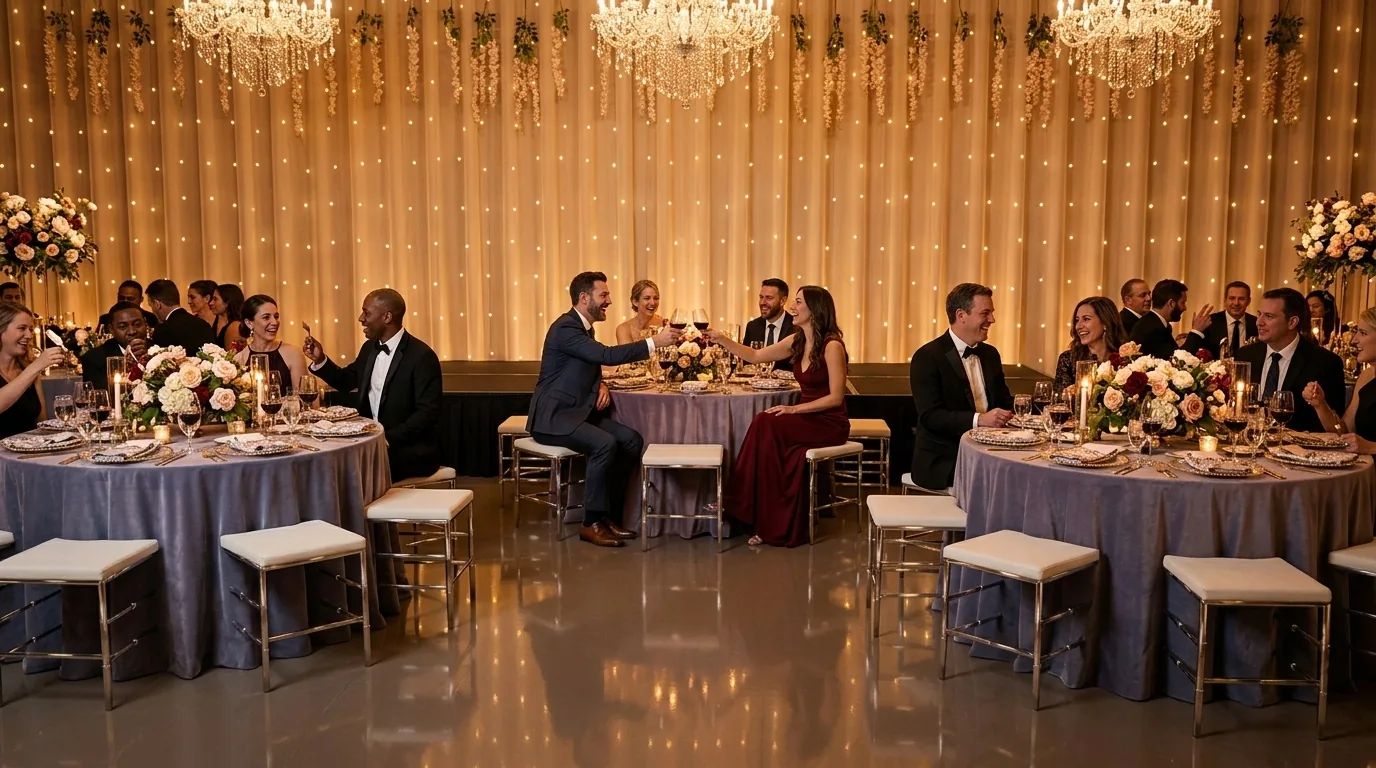
Convention center rooms are usually set by the venue in standard formats: theater rows, classroom tables, banquet rounds or receptions with cocktail tables. Our guide to conference seating styles compares the capacity of each. Where outside rentals add the most is the look: lounge furniture for a VIP area or booth, upgraded chairs for a gala, lighting and decor, and AV where the venue allows outside AV.
Timing around Chicago's calendar
Convention centers book major shows years ahead, and downtown hotel rates rise when big shows and city events overlap. Check your dates against the Chicago event planning calendar, including the Chicago Marathon on October 10, 2027, and summer festivals in Grant Park. For downtown venues, plan guest transit and parking early; see guest parking and transit.
Planning steps
- 1Step 1Get the manualevent or exhibitor manual, with deadlines and rules
- 2Step 2Map exclusivescatering, power, internet, rigging and freight
- 3Step 3Confirm outside vendorswho can deliver, when and with what insurance
- 4Step 4Order earlyvenue and contractor services have deadlines with late fees
- 5Step 5Plan move-outpickups scheduled inside the venue's window
Frequently asked questions
Can I bring my own rentals into McCormick Place?
What is an official service contractor?
What is drayage?
Is catering exclusive at convention centers?
What insurance do convention centers require?
Which convention centers are near Chicago?
Plan your convention center event with us
Send us your venue, dates and the rules from your manual. We will tell you which rentals can come from outside, build the list for lounge areas, galas and booths, and price it before anyone calls. Start your plan and instant quote or book a free 15-minute planning call. Corporate planners can also see our corporate events guide.
- Seasons & Venues
- Corporate & Nonprofit
- Budget & Booking
Ready to rent?
Keep planning
 December Holiday Party Rentals in Chicago: Planning Guide
 Booking a Barn Venue Near Chicago: 12 Things to Check
 Planning an Event in Chicago in May: What to Watch For
 Museum and Gallery Event Venues in Chicago: Rental Rules
