Event Rentals at a Chicago Cultural Center or Civic Venue
How to plan furniture rentals for an event at a city-owned cultural center or civic building in downtown Chicago.
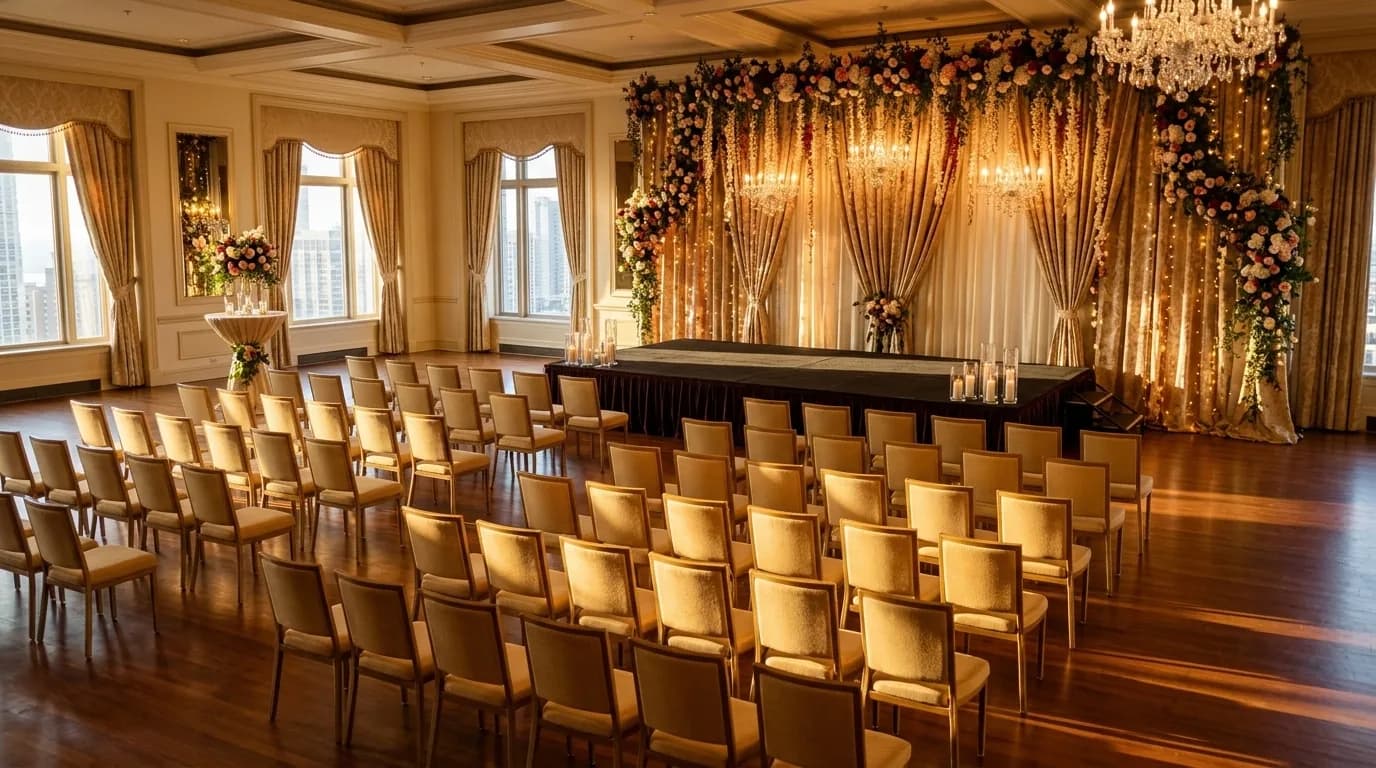
Downtown Chicago has a handful of city-owned cultural centers and civic buildings available for public and private events, from corporate programs to nonprofit galas to community gatherings. The Chicago Cultural Center is probably the best known example, with its grand hall and historic architecture, but it's one of several city-owned spaces that work similarly. These buildings offer a lot of character, but they come with rules that a typical rental hall doesn't have.
Book through the city's venue rental office
A city-owned cultural center or civic building isn't run like a private event space. You book it through the city's own venue rental office, which handles availability, fees, and the paperwork for your event. This process can take longer than booking a private venue, so start early, especially if you have a specific date in mind.
| Step | Who handles it | What to confirm |
|---|---|---|
| Reserve the room or hall | City venue rental office | Availability, rental fee, deposit |
| Public event permit | City permitting office | Required for larger public gatherings |
| Preservation rules | Building staff or facilities team | What's allowed on walls and floors |
| Loading access | Building staff | Dock location, elevator, timing |
| Certificate of insurance | Building staff | Usually required from whoever delivers rentals |
Historic preservation rules
Many of these buildings are decades or over a century old, with ornate details, marble, or historic finishes that the city works to protect. That usually means strict rules about what you can attach to walls or how you treat the floors:
- No nails, tape, or adhesive-backed decorations on walls or columns
- Floor protection required under certain types of furniture or equipment
- Limits on candles or open flame near historic materials
- Restrictions on where furniture legs or wheeled carts can go
Ask the building's facilities team for their specific list before you plan décor or furniture placement, since what's allowed varies by building and by room.
Public event permits
If your event is open to the public, or large enough to draw a crowd on city property, you may need a public event permit in addition to your venue booking. This is separate from reserving the room itself. Our Park District permit guide covers permitting for outdoor park events, and similar logic applies to public gatherings tied to civic buildings. When in doubt, ask the venue rental office directly whether your event needs its own permit.
Loading access in a dense downtown building
These buildings sit in busy parts of downtown, often without a dedicated loading dock sized for a lot of deliveries at once. Getting rental chairs, tables, and equipment inside usually means a specific entrance, a freight elevator if the event is on an upper floor, and a scheduled time window.
- 1Step 1Ask for the building's loading entranceand confirm it with your rental provider.
- 2Step 2Reserve a delivery windowthrough the venue office, since other events may share the building.
- 3Step 3Confirm elevator accessif your room isn't on the ground floor.
- 4Step 4Check street parking and loading zone rulesnear the building for your delivery truck.
- 5Step 5Appoint a point of contactto meet the delivery crew at the right entrance.
Our downtown loading zone guide has more on what the city allows for commercial deliveries near busy downtown blocks, and our alley deliveries guide covers tighter back-of-building access that sometimes applies downtown too.
Certificates of insurance
Like most formal venues, a city-owned building generally requires a certificate of insurance from any outside vendor bringing in furniture or equipment. Ask whoever delivers your rentals for their certificate and send it to the venue office ahead of your event date, since approval can take time to process.
Choosing furniture for a historic room
A grand hall or ornate civic room can carry simple, clean furniture well without competing with the architecture. A ghost chair keeps sightlines open in a room already full of visual detail, while a bentwood chair fits a more traditional civic setting. Check the tablecloth size chart if the room's existing tables differ from your own rental tables. For accessibility, see our ADA accessible seating and pathways guide, since historic buildings sometimes have uneven floors or narrow doorways that affect pathway planning.
Frequently asked questions
How do I book a city-owned cultural center for an event?
Can I bring in my own furniture to a historic civic building?
Do I need a permit for an event at a civic venue?
Who provides the certificate of insurance for rentals?
Is there a loading dock at these buildings?
Can I decorate the walls or columns in a historic hall?
Plan your civic venue event
We work with historic buildings and their preservation rules often. Book a free 15-minute seating call or request a quote with your venue and guest count.
Ready to rent?
 Party Planning in the West Loop, Chicago: Lofts, Rooftops and Docks
 Party Planning in the West Loop, Chicago: Lofts, Rooftops and Docks
 Event Rentals at Museum Campus Chicago: Field Museum, Shedd, Adler
 Chicago Winter Event Planning: Snow, Cold and Early Sunsets