Korean Doljanchi First Birthday Planning: Table and Guests
How to plan a Korean doljanchi first birthday, from the doljabi ceremony and doljasang table to hanbok, rice cakes, guests and Chicago rentals.
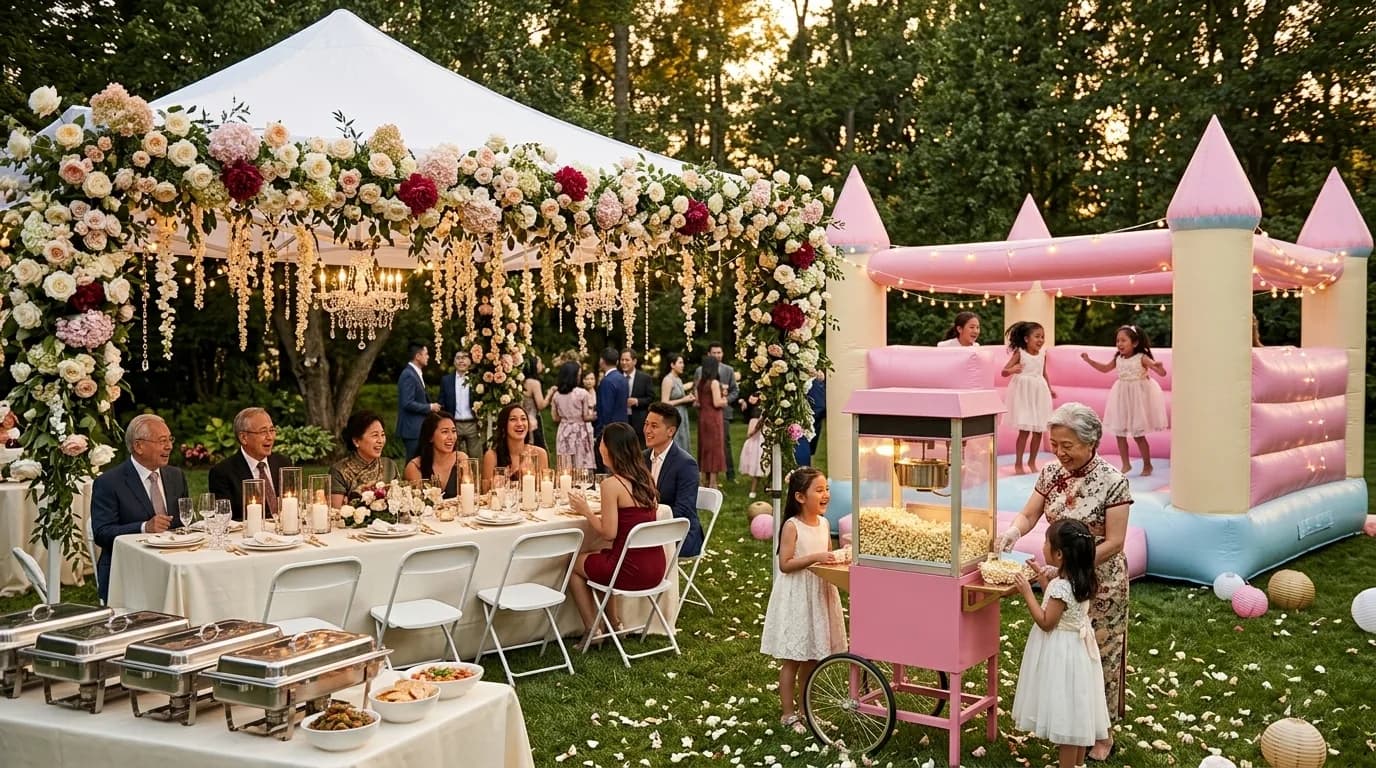
In Korea, a baby's first birthday was historically a milestone because infant survival could not be taken for granted, and the celebration has remained a joyful family party. Today, many Korean and Korean American families hold a doljanchi with relatives, close friends and a photographer. The planning pain is a mix of tradition and toddler: a table that needs the right foods, a ceremony that needs the baby awake and calm, and a crowd that might include 40 adults and ten children. This guide shows how to handle both.
- Dol means the first birthday
- 1st birthday
- Dol means the first birthday
- Plan length around nap and feeding
- 2 to 3 hrs
- Plan length around nap and feeding
- Common guest range (varies)
- 30 to 80
- Common guest range (varies)
- The ceremonial table, set at the front
- 1 doljasang
- The ceremonial table, set at the front
- Objects for the doljabi, chosen by the family
- 5 to 8
- Objects for the doljabi, chosen by the family
- Seats for guests, since most sit to eat
- 70 to 100%
- Seats for guests, since most sit to eat
What happens at a doljanchi
The baby wears a hanbok, a traditional Korean outfit, often with a hat and shoes. A decorated table called the doljasang is set with foods and symbolic objects. At the center of the ceremony is doljabi, in which the baby is placed in front of the table and picks one item. Each item stands for a future: thread for long life, a pencil or book for scholarship, money for wealth, a stethoscope or a microphone in modern versions, and so on. Families choose which objects to include and what they mean. Guests cheer, photograph and often bring gifts of gold rings (a custom in Korea) or money.
Traditional foods include baekseolgi (white steamed rice cake), songpyeon, sujebi (hand pulled dough soup) and colorful rice cakes, along with fruit, and a family meal that often includes miyeokguk (seaweed soup) and other Korean dishes. Details vary by region, family and religion. Some families hold a Christian prayer or skip certain foods. Ask your elders what is most important.
For other Korean tables, see Korean pyebaek table setup, which also uses a ceremonial table.
The doljasang and room at a glance
Setting the doljasang
The doljasang is traditionally a low table, though many modern families use a regular table with a backdrop. A common layout includes a large rice cake arrangement in front, fruit stacks, a tiered display of colorful rice cakes, and the doljabi objects in a row or arc. Sets and arrangements can be bought, rented or made by a Korean bakery or party service, so ask your community for recommendations. For rental help, pick sturdy tables, floor-length linen in a plain color so the colorful foods stand out, and a backdrop stand. See centerpiece risers and stands for height ideas.
Include a photo area. Many parents commission a custom photo backdrop with balloons, flowers and a banner with the baby's name and birth month. Include a small chair for the baby to sit in, a soft mat and a camera spot.
The doljabi step by step
The baby is brought to the table, usually after the guests are seated and the baby has napped. The parents may place the baby in the center, step back and encourage the baby to reach for an item. It can take a few seconds or several minutes, and babies have their own ideas, so don't force it. Cheer when the baby chooses. Some families allow the baby to pick a second item. Then everyone takes photos. Keep it lighthearted, because the baby may cry, and that is also part of the story.
Seating and food by guest count
| Guests | Seats | Tables | Food plan | Photo setup |
|---|---|---|---|---|
| 20 | 16 to 20 | 2 round tables, 1 buffet | Home-cooked or trays | Simple backdrop |
| 40 | 32 to 40 | 4 rounds, 1 to 2 buffet | Catered Korean menu | Full backdrop, props |
| 60 | 50 to 60 | 6 rounds, 2 buffet | Restaurant or caterer | Backdrop and photographer |
| 80 | 65 to 80 | 8 rounds, 2 buffet | Banquet room | Backdrop, photographer, video |
Many families take over a restaurant room or banquet space. Count a high chair for each baby and a few kid-sized chairs. The kids tables and chairs guide helps with sizing for toddlers.
Planning steps
- 1Step 1Choose the date and timePick a time after the baby's nap, often early afternoon.
- 2Step 2Set the guest listInclude grandparents, aunts and uncles, close friends and kids.
- 3Step 3Book the spaceA restaurant room, hall or home, with enough seating.
- 4Step 4Order the tableRice cakes, fruit, the doljasang setup and the objects.
- 5Step 5Plan the programWelcome, doljabi, photos, meal, cake and gifts.
- 6Step 6Confirm vendors and rentalsPhotographer, backdrop, tables, chairs and linens.
Making it work for a one-year-old
Schedule around naps and feeding. Keep the formal portion short and bring snacks, a change of clothes and a quiet room for the baby. Have a plan for crowd noise. Seat grandparents with a good view, and ask someone to hold the baby between photos. Pick safe objects for doljabi (nothing sharp or small enough to swallow). For the outfit, check the fit and warmth beforehand. For gifts, keep a list and a plan for thank-you notes.
Chicago-area notes
Chicago has a large Korean community, particularly in the north side and northwest suburbs, with many restaurants, banquet rooms and bakeries that specialize in doljanchi tables, so there are options for every guest count. Book early for weekends in spring and fall. A home party in winter needs coats and boots and a plan for strollers. For tents or outdoor space in summer, see the backyard tent guide for 50 guests. Parking and traffic on weekends can be hard, so tell guests where to park. Check your village or park district rules if you use a public pavilion.
Free download: Birthday Party Planning Kit
The Birthday Party Planning Kit includes a timeline, guest list, menu and rentals checklist that fits a first birthday. It also gives you a space for the doljabi objects and a photo list so nothing is forgotten on a busy day.
Frequently asked questions
What is a doljanchi?
What is doljabi?
What foods are on a doljasang?
How many guests are at a doljanchi?
What should the baby wear for dol?
When should I send invitations for a doljanchi?
What gifts are given at a doljanchi?
How long should a doljanchi last?
Ready to price your rentals?
When you know your guest count and date, request a quote and we will build a list of tables, chairs, linens and tent options from partner rental companies. If you would rather talk it through first, book a free planning call.
- Cultural Celebrations
- Parties
- Doljanchi
Ready to rent?
Keep planning
 Diwali Party Seating and Rentals: A Chicago Host's Guide
- Baptism and Christening Party Rentals: Tables, Chairs and Layouts
 Eid Celebration Seating and Rentals: Layouts for Home and Hall
- Holi Celebration Event Planning: Colors, Cleanup, Safety
